HMS 1 vs HMS 2 vs Shredded: Choosing the Right Grade for Your Mill
Choosing the right scrap grade for your mill is one of the most consequential decisions a procurement team makes. The difference between HMS 1, HMS 2, and shredded scrap goes beyond price — it affects melt yield, energy consumption, refractory wear, and ultimately your cost per finished tonne of steel.
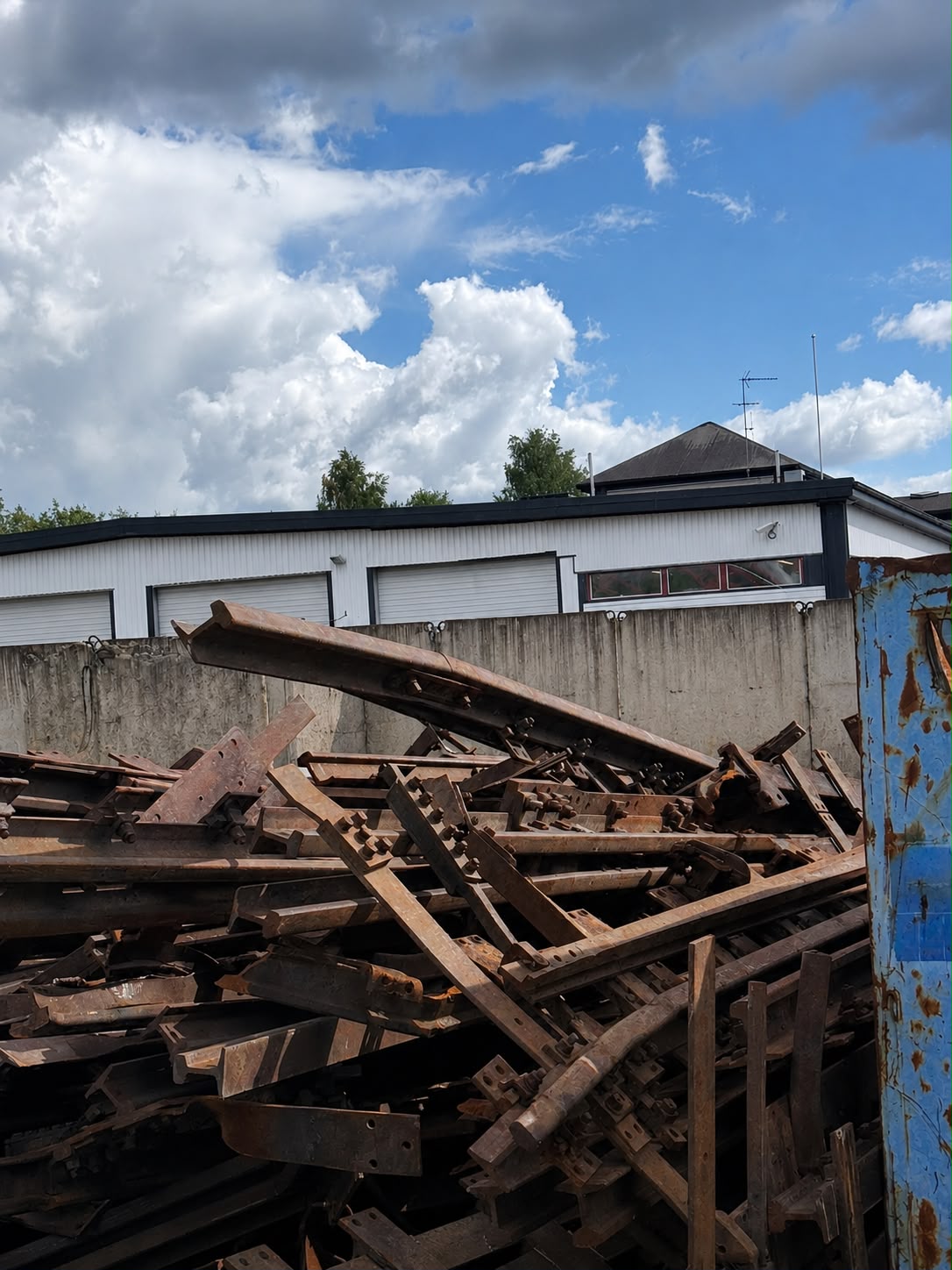
HMS 1 (Heavy Melting Scrap 1) consists of clean carbon steel scrap with a minimum thickness of 6 mm. It includes material like beams, columns, and heavy plate cuttings. Its key advantage is high density — you get more steel per cubic metre of shipping space, and higher yield per furnace charge. For mills that produce long products (rebar, sections), HMS 1 is typically the preferred feed.
HMS 2 is lighter gauge scrap — material between 3 mm and 6 mm thick, such as sheet scrap, light structural sections, and some automotive stamping. It costs less per tonne than HMS 1, but it also has lower density and higher oxidation losses during melting. The cost advantage can disappear quickly if your furnace is optimised for heavier charge material.
Shredded scrap is processed through a hammer mill to produce a consistent, dense, contaminant-free feed. Its uniform size and chemistry make it ideal for EAF (Electric Arc Furnace) operations that require predictable charge behaviour. Shredded scrap typically commands a premium over HMS grades, but the productivity gain — faster melt times, lower energy per tonne, less slag — often justifies the premium for modern mills.
The decision matrix is straightforward: if your mill has a modern EAF with good slag control and you prioritise productivity, shredded scrap is usually the best value despite the higher per-tonne price. If you operate an older furnace or produce long products, HMS 1 offers the best balance of cost and yield. HMS 2 can work as a blend component, but using it as your primary feed grade rarely delivers the savings the price differential suggests.
At Renova Trade, we help buyers select the right grade mix based on their furnace type, product mix, and logistics constraints. We can source HMS 1, HMS 2, and shredded scrap from verified European suppliers and coordinate the blended shipments that optimise your landed cost.